Friday, July 15, 2016

Love Triangle Dynamics in the Force Awakens [Finn] 2.0

[Update: This is a 2.0 post. I'm editing it to be stand-alone, and I also wanted to clarify more the literary focus of this, because it seems the message could use greater clarity. A lot of the sarcasm has been removed to further this goal, and the pictures are mostly gone; collateral damage is sad, but c'est la vie]

Archetypes/Tropes/Patterning an Explanation
It is a truth of storytelling, for as long as it has existed, that stories fall into patterns. There are many variations of said patterns, but the underlying structure is the same. There are many reasons for this. The shared structure gives the audience an idea of what it's getting in to. Humans are similar in many ways--we like hearing about adventure, high stakes, love and loss, etc etc.  
These patterns, if they are particularly long/far-reaching, are called "Archetypes". A great example of an archetypal story is the "Hero's Journey", in which a person with a destiny receives a call to action, accepts it, and fights against an enemy, sacrificing along the way until they ultimately beat the odds. A "Tragedy" is a story about a tragic hero who has a fatal flaw which ultimately brings him/her and everyone around him/her to a nasty end. You get the drift.
A "trope" is like a smaller pattern within the larger pattern. This is like commonality in Rom-Coms of a sloppy-ish guy and a slightly anal-retentive woman being the main characters, or how car chases are used in almost every action movie. These archetypes/tropes/patterns are great because they give a common structure while simultaneously providing a chance for creativity; they can be tweaked, twisted, or elsewise manipulated. When this happens, it's especially important to pay attention to them, because it's usually done for a reason. (All art is deliberate)
38a6d02cbd264bd354a502b0bdc90277.jpg
Star Wars
The whole Star Wars franchise follows the archetypal Hero's Journey. Each section is about a hero with a destiny receiving a call to action and pursuing it. Along with this, Star Wars is sci-fi, action-adventure, space-fantasy, epic, and so on. Point being, it follows the archetypal story while also fitting into other categories.
Appearance of Love Triangle Dynamic
Star Wars is a space fantasy epic Hero's Journey, so when a trope from another type of story shows up, even just a little, that's interesting. It's an additive to the base pattern, a change, an irregularity. This irregularity of patterning is what brings us here today. I don't know if there's an official name for it, but I can break it down like this:
In romance-driven stories, it's very typical to get a love triangle. In female-based love triangles, there's one type I'm going to call the Good Guy/Bad Guy. The GG/BG trope is very common and shows up in books, musicals, movies, etc etc., and it's very predictable:

  • There is a central female character who, at one time, has two men interested in her
  • One man is the Good Guy
    • He has typically "good" traits--he's friendly, conventionally handsome, driven to be good, and holds some respectable position in society
    • This guy is usually the one the female character's family/friends like
  • The other man is the Bad Guy
    • He has typically "bad" traits--a temper/emotional issues, violent tendencies, etc.
    • This guy is usually disliked by the female character's family/friends
In most modern stories where this trope occurs, it's a given the girl will eventually choose the GG over the BG. It's whatever; it's a story, but this pattern is also interesting. It was not always so. For example, during the Victorian age, a lot of female writers wrote their stories where the BG was chosen instead (Pride and Prejudice, North and South, Jane Eyre, etc. (though not Victorian, "The Beauty and the Beast" follows this as well.)
Now, the point of love triangles is tension. There has to be doubt about which man the woman will ultimately choose. This drives that aspect of the plot. The audience is meant to weigh and measure along with the heroine--who is the better choice?
The issue comes in where one choice is considered the automatic "right" one. This is problematic:

  • It discourages critical thinking in the audience. If the choice is obvious, why scrutinize it?
  • It sets up/reinforces a cultural "norm" for these situations. This further discourages critical thinking.
Oftentimes, this "obvious choice" comes from the audience rather than the writer. The goal of a story, remember, is tension. It's a poor writer who fails to provide tension. So, a quick run-down of the oft-ignored aspects of these GG/BG love triangle dynamics.

  • Good Guy
    • Usually image-driven. He cares so much about being "good" that he often misses the mark.
    • Despite being "Good", GG is dishonest to the heroine
      • GGs often withhold information in order to "keep the heroine safe"
      • GGs (especially in longer stories) typically have some sort of dark secret about themselves. They hide this secret from the heroine until externally forced to fess up.
    • The dishonesty directly results in the heroine encountering BG
    • GG, when pressed into me-or-her situation with the heroine, will either choose himself or sacrifice his life for the heroine; it's 0 or 100 for these guys and rarely in between.
  • Bad Guy
    • Usually driven by self hatred/revenge/passion/some strong "dark" emotion
    • Despite being "Bad", BG is honest with the heroine
      • BG usually tells the heroine important-but-unpleasant information that he feels she ought to know
      • BG is very up-front about their dark secret/past. They openly admit to misdeeds and often share their darkest secret with the heroine (and only her).
    • BG does not physically harm the heroine
      • One of the most obvious actions of a BG is the kidnapping of the heroine. This goes back to "Hades and Persephone" (and probably further).
      • During this event, the BG goes out of his way to put the heroine at ease/ensure her safety
    • BG, when pressed into a me-or-her situation, rarely chooses 0 or 100, but sits somewhere in the middle, opting for suffering for himself in order to benefit the heroine.
This patterning of character is very common in stories with love triangles, but it doesn't show up in other genres (like war stories, revenge tales, chase stories, children's stories, etc).
Where Feminism Comes In
Feminism comes in where critical thinking ends. It's very easy for people to side with GG because he's, well, good. However, when the choice is that easy, GG's negative traits are ignored, and the nuance of the story is lost. His motivations are considered, but not the fallout or implication of his actions and choices. This automatic choice also creates a sexist, man-centered way of thinking about the love triangle. It boils down to, "GG deserves the heroine", as if the female character is some prize in a video game that enough "good" points unlock.
The most negative aspect of GG is his lying. By lying to/misleading the heroine, he takes away her ability to choose for herself--her ability to consent to anything. He does this because he doesn't trust her. "I didn't want you to know" "I was protecting you" "Well, because I knew you'd react like this" "I didn't want you to get the wrong idea about me" are all different ways of excusing the removal of the heroine's agency (ability/freedom to act). When he is reinforced as the "best choice", his patronizing actions are reinforced as well. However, because GG is the "obvious choice", this aspect of his character is completely ignored. He is celebrated for being good despite removing the agency of the female heroine. This is insidious, especially if people apply this sort of thinking to their real lives (I hope they don't).
The Force Awakens
This love-triangle dynamic for romance stories had been floating around in my mind for a little while when I rewatched The Force Awakens this past week. It struck me immediately that though not a romance story, TFA employs the typical romantic triangle character patterning. What does this mean? I'm not sure. The story is not a romance as of yet; the writers might be employing this patterning to add another layer to the story, to add another level of tension, to give the audience something else to pay attention to, but it is there nonetheless, and art is deliberate.
Types of Analysis Employed
For the sake of this writing, I'll be using a mix of literary criticisms.
1: New Criticism--involves intensive dissection of the story as far as internal consistency, cause and effect, etc.
2: Feminist Criticism--rather than focusing on how "deserving" or "undeserving" the male characters in the dynamic are, I will instead be looking at how their actions fit the pattern/affect the heroine, making her--the protagonist--the center of it all (as it should be).
The Dissection: Finn and how he fits
For today, we'll start with Finn. The other posts will follow, and I'm saving Rey for last because she's the most interesting and the one who most subverts the triangle pattern.


Finn is Goodness (Image)-Driven
  • He quits the notorious First Order at his first battle/massacre
    • The first inkling of doubt we see is when his fellow stormtrooper is shot by Poe in front of Finn. He freezes and seems very affected by this person's death
    • His shell-shock is further compounded when the villagers are killed. He does not participate.
    • Therefore we can glean this: Finn cares about human life. 
    • The shot that started it all.
  • The writing for Finn's dialogue shows the image-driven tendency, as well. During his heartfelt confession to Rey on Takodana, he reveals where his interest in Rey began, "You looked at me like no one ever had" (emphasis mine). "Looked". Art is deliberate. He does not say, "You were such a wonderful person, I had to help," or "I knew we shared the same noble goal", etc. He says, "You looked at me". She saw an image of Finn that he liked, so he went with it.
  • He is very affected by being called "traitor", despite believing himself to have made the right choice, showing he's touchy about how others perceive him. Twice, the writers open a fight for Finn with a left-screen enemy yelling "traitor" to Finn's back, and Finn responding to the word. This distinction is less clear in his fight with 'Tr8r' (who, by the way, should really be called Tr8r-H8r, but I digress), as Finn only becomes aware of Tr8r's presence when he yells. But, in Finn's fight with Kylo, he turns around only/draws his light saber when Kylo yells "traitor"--not when he first sees him, not when Rey is knocked out, not when Kylo advances or swings his lightsaber, only when "traitor" is yelled. Art is deliberate.
Finn's Goodness/desire to appear Good leads him to missing the mark

  • Finn quits the first order because he values human life; however, this does not prevent him from taking human life throughout the rest of the story. 
    • Yes, much of these killings spring from self-defense, however, we are not given a scene showing him to be sorrowful about this waste of life, despite his care for human life.
    • The people he kills are storm troopers. He was a storm trooper. 
      • We know they are taken as children and indoctrinated to become the killing machines they are. 
      • It is played as a point of empathy for Finn--"isn't it sad? What a horrible thing.", but though he is aware of this backstory, he kills storm troopers without the flicker of an eyelid. 
      • Each storm trooper is a potential-him. Each one has experienced the same things. Each one could, like Finn, defect and join the "good side", but this potential is not acknowledged by him onscreen.
  • Despite Finn's care for human life, he's willing to risk all free life in the Galaxy in his trip to Starkiller base (more on this later)
Despite being "Good", Finn is dishonest

  • Finn lies to Rey about his appearance on Jakku, "I'm with the Resistance."
    • He fears, perhaps, her rejection, so he chooses another persona for himself, a fighter for the Resistance. This story grows to include that he's a "big deal". He could have invented another story for himself, but he makes himself a heroic rebel fighter; he wants to come across as good/heroic.
  • Even after he gets to know Rey better, he keeps this lie going. This is problematic:
    • It leads to a false sense of security: A "big deal" in the Resistance, Finn would have contacts, resources, and knowledge to help him/his party avoid capture by the First Order. However, he does not have these things.
    • It keeps Rey in the dark about the truth of their situation: she doesn't know how alone they are in their fight. She doesn't know who, precisely, is after them. She doesn't know the true character of her 'friend'/travel-mate. Would this knowledge change her decisions? We don't know, but she's entitled to knowing the entirety of what she's getting herself into. [trust is, after all, the basis of consent and relationships both].
    • Finn does eventually come clean, but only when it has a chance of benefiting him. [Especially for this moment, I don't much care for his motivations/emotions. The situation of his reveal bears the following out]
      • He tells Rey his past to lend more credence to his argument, "we have to leave".
      • He could have told her at any other time if his reasoning was "she needs to know (because she's my friend)", but he waits until it's an all-or-nothing situation. If she rejects him, he's leaving anyway, and if she comes with him, it's a win-win.
The dishonesty directly results in the heroine encountering BG
  • Rey goes alone into the forest because she is upset after viewing the visions of the light saber. She wandered into the basement and found the lightsaber because she was upset at Finn after he revealed his plans to leave/his past.
  • Finn completely fails to warn Rey of the extremely terrifyingly violent, force-using lightsaber-tornado that is Kylo Ren. Finn knows about Kylo. He knows Kylo is hunting for the droid. He knows Kylo is super-strong at the force. He knows Kylo tortures people and commands the murder of villagers. Kylo keeps the ashes of his enemies in his bedroom. Finn doesn't tell Rey.
    • Rey is not stupid. If she knew the extent of the power of the First Order, I doubt she would have gone off by herself, no matter how upset she was. (Speculation, but really, she has strong self-preservation)
    • In the forest, Rey stays behind to cover for BB-8's escape. This shows she assumes A) She'll succeed, at least long enough for BB-8 to escape B) the location of the map will remain secret even if she is captured.
      • Fighting Kylo renders both of these assumptions void. A) It takes him less than a second to incapacitate her with the force. BB-8 can't have gotten far in that time. B) He's a powerful force user; he can get the location of the map from her mind.
      • Rey is not stupid. If she knew what she was up against in that forest, I think she would have booked it.
                                      
                                                        But she doesn't know.
And she runs too late.
And, well, "Heroine meets BG"
This is why we can't have nice things.
Finn exhibits 0-or-100 reasoning/action
  • He is willing to leave Rey on Takodana after about a minute of argument despite the risk he perceives. (0)
  • He is willing to risk the lives of everyone in the galaxy to get Rey back from Starkiller base. (100)
    • The continued existence of the Resistance (and, by connection, the hope of freedom in the galaxy in perpetuity) is pinned on this desperate, last-ditch effort to blow up Starkiller Base. Finn lies, leading them into a false sense of security (sound familiar?) in order to get Rey back, to prove himself a true friend (image, again).
    • At the end of the day, if his plan hadn't worked, everyone would have died. Leia, Chewie, Han, Poe, himself, and probably even Rey eventually, not to mention everyone else left who opposes the First Order. Now, this is a story, so, of course, he and Han run into the person they need to run into (Phasma) right when they need it, and, of course, she folds like wet paper to their demands, and the galaxy is saved. This does not change what Finn was willing to risk going in.


Finn's Overall Conflict/Motivations
Finn, understandably, has an identity problem. He never got the chance to grow up properly, so he's having to figure it all out as he goes. He doesn't know who is he quite yet, and he's on the road to becoming. This struggle leads to the problems we face; Finn doesn't lie and endanger others for no reason. It all has to do with Finn's character arc. His struggle, internally experienced and externally expressed, is about finding his place and realizing who he is. That's what he cares the most about. It's what motivates him more than anything else. 
Curiously, this is also the typical struggle of the GG in the triangle dynamic. Again, always, art is deliberate. Finn's struggle could have revolved entirely around violence/the fight against his training and bypassed all the dishonesty, unintended consequences and 0-or-100 choices entirely, but it doesn't. Finn's character is written to fit the GG character in the triangle dynamic.

Conclusion/Application of Analysis
Finn, through his actions, demonstrates himself to be a character fitting the Good Guy trope in love triangle dynamics. If the rabid defense of his fans is any indicator, his characterization has had the same effect  as the GG seen in actual romantic triangles; his negative aspects are ignored in favor of his positive ones. He is seen to "deserve" romantic rewards for his pure motivations, regardless of the fallout of his actions. Because of his struggle, his mistakes are ignored. 
It's not the character of Finn who is harmful or bad, it's this narrow interpretation of his character. When he is interpreted thusly and as an actual romantic interest for Rey, it minimizes the agency (and importance) of Rey, who, remember, is the protagonist. The violation of consent is not excusable because someone is otherwise "good". (This is what the current fight in our country about sexual assault is all about.......). Consent under false pretenses does not count as consent. I don't care if you think Finn and Rey should get together; do it all you like, but you should not sweep this under the rug. 
Disregarding for a moment the cultural/romantic implications, saying, "Finn is just a good guy" insults his character and the work put into the building of his character. He's not one-note. He's complex, dynamic, human. He has flaws. I'm strong proponent of the idea that loving a person (or character) includes acknowledging and accepting their flaws. Otherwise, what's the point?

Thursday, July 14, 2016

Choose the "Bad" Guy: Feminist Analysis of Love Triangles in TV/Movies [Part II]

[Disclaimer: Howdy; it's come to my attention that I need to start this way to avoid people getting the wrong idea: I'm writing about LITERARY patterns, LITERARY characters, and the places where THEY live and act. Their worlds, their circumstances. This is not a direct "Hey, go out with your life and do x" post. Literary characters are not you, and you are not them. I'm writing about how agency is portrayed and how audience is "supposed" to feel in regards to female agency/freedom/expression. Enjoy the post!]

Dealing Out Truths
The last time we met, you read about the common misconceptions people have about the “Nice Guy should get the Girl” dynamic shown in many modern stories. This time, rather than looking at misconceptions, we’ll be looking at things that are true, if somewhat obscured, in these love triangle narratives.
Nice Guy Loves Conditionally
As Nice Guys are Nice™, they’re normally very concerned about their image. They have an image of themselves they want to present to the world. Anything messing with this image is unacceptable. This is why Nice Guy is typically very strict on Girl’s actions.
  • Raoul takes control of the Phantom-situation despite Christine knowing way more about the Phantom, and because of his ignorance and desire to look like a hero, puts Christine and himself into a fat pot of danger.
  • Aang thwarts Katara’s decisions pretty much every time she makes them. He doesn’t want her to take the water-bending scroll from the pirates. He doesn’t want her to avenge her mother’s death (and equates his temporary losing of his pet to the death of her mother). He doesn’t want her to blood-bend. He doesn’t want her to be emotional, pretty much ever because he wants her to fit his image of himself--the passive Buddhist-monk type.
  • Stefan doesn’t want Elena or Caroline to make their own-vampire choices. He doesn’t want them to bite people, even though they can both control themselves (unlike him). He doesn’t want them to be violent (even when situations call for it). He wants them to desperately want to be human again, like he does.
Nice Guy is willing to cut Girl off if she does something he doesn’t approve of, or if she refuses to do something he wants her to.
Publication2.jpg
Bad Guy Loves Unconditionally
One of the “alluring” things about Bad Guy is that all he requires to keep his interest in Girl is that she….exist. As herself. Bad Guy accepts inconvenient or unpleasant aspects of Girl/his relationship to her without wavering in his affection.
  • Phantom is the most obsessive of the guys on our list because in addition to be a Bad Guy, he’s also the villain of the tale. However, he accepts Christine’s personality. He offers himself/his life to her-- “Music of the Night”/”Past the Point of No Return”--but ultimately lets her go when she rejects him. He doesn’t interfere with her life again, but does leave a rose with her ring on her gravestone, showing he loved her from afar for her entire life, even when she was married to and living with Raoul.
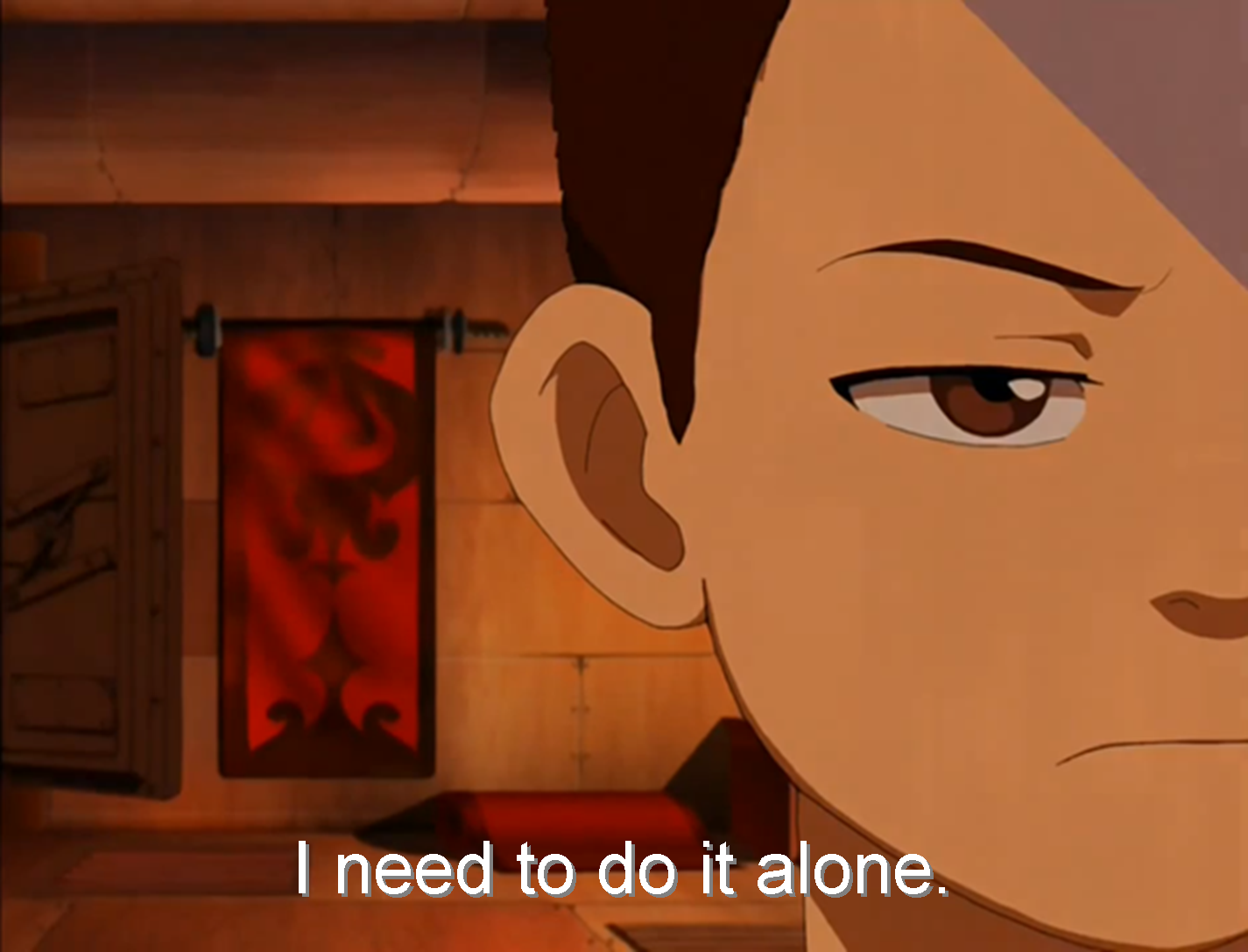
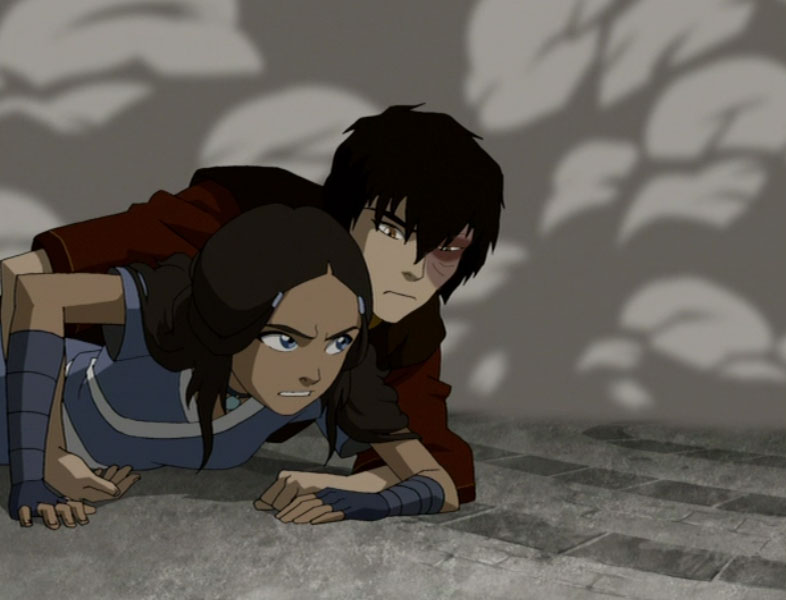
  • Zuko accepts every part of Katara. He accepts the different potential versions of her, as well. He’s just as fine with Katara-the-murderer as he is with Katara-the-merciful. He takes a lightning bolt for her even though, canonically, they’re “just friends” and she ends up with Aang.
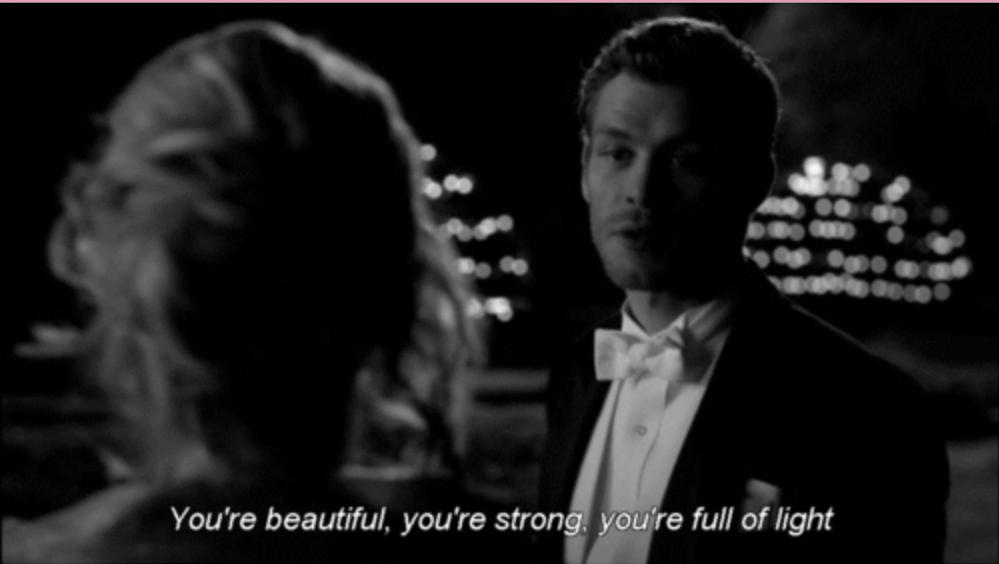
  • Klaus loves Caroline no matter who she is currently romantically entangled with or what she has done. He loves her when she sells him out again and again, using his affection against him. He loves her when her friends try to kill him. He loves her when she gets magically knocked up with another man’s kids (unlike Stefan, who can’t handle it….)
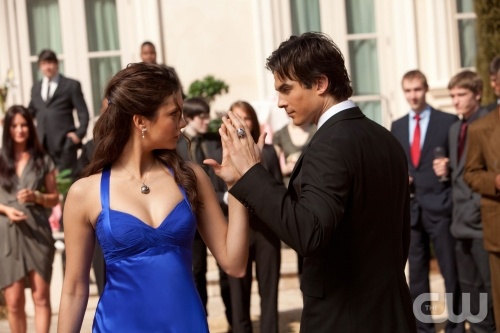
  • Damon loves Elena as a human, as a vampire, and during every step in-between. When she’s violent, he loves her. When she’s broken, he loves her. When she hates him, he loves her.
Picture10.jpg
Nice Guy is Closed
As we’ve hit on already (and I just want to hammer home), Nice Guy tends to keep secrets about himself, especially inconvenient or deep-dark secrets. He keeps the secrets to preserve his image or to make things easier for himself. He doesn’t reveal the truth to Girl unless he has to. Why does Nice Guy do this? Because, ultimately, Nice Guy does not trust Girl. He does not trust Girl to still like him if the truth is known. He doesn’t truth Girl to make the “right” decision. So he takes that choice away from her by keeping her in the dark and feeding her bullshit.
Picture20.jpg
Because Nice Guy is so keen on keeping his own skeletons in his closet, he represses Girl’s skeleton’s, also (see above with the conditional love). If Girl is not the Perfect Princess™ Nice Guy wants her to be, then he’s done with her. This is unrealistic. This is inhumane. At worst, it’s mastubatory. Nice Guy cripples Girl to never be able to fully express herself. Instead, she always has to be on her toes, worrying about Nice Guy’s approval.


Bad Guy is Open
On the other hand, Bad Guy is almost never hiding anything (other than his soft-and-gooey center). His worst deeds are all common knowledge, and, when given the chance, Bad Guy will usually share even more of his dark past with Girl. And, paired with the aforementioned I’m-Not-So-Bad Confession™, Bad guy does everything he can to level the playing field with Girl. Yeah, he kidnaps her, but he doesn’t hurt her, and he gives her the information she needs to emotionally cripple him forever. This info-bomb serves as an apology of sorts for the kidnapping, but more importantly, it is Girl’s fail-safe. Bad Guy is saying, “Hey, if I ever step out of line, you can destroy me with the information I’ve just given you.” Why does he do this? Because he trusts her. Bad Guy knows that for her to trust him, he has to show his vulnerability first, so he does. He trusts what she’ll do with this information.
WSngs4_0134_1.jpg
Pictured: Bad Guy appeasing Girl
Bad Guy’s vulnerability and sharing of his mistakes allows for something else--reciprocity. Girl can be human with Bad Guy. She can make mistakes. She can flawed--angry, lonely, sad, vengeful. Bad Guy will not judge her for these impulses or try to control them. Bad Guy knows what it’s like. Having accepted the flaws within himself, Bad Guy is also in a unique position to help Girl navigate this process.
Picture22.jpg
Klaus: “Let’s get you a drink”
Picture23.jpg
Nice Guy Encourages Stagnation
Because Nice Guy is so invested in how Girl makes him look, Nice Guy is very afraid of change. Nice Guy isn’t usually up for debating with girl when they disagree; he just wants girl to do what he says. He takes an “all or nothing” approach to it. If Girl doesn’t do what he wants, he cuts her off and/or guilts her until she comes around. It’s very rare for Nice Guy to change for Girl, because Nice Guy is already perfect, right?
531925.jpg
Mmmm. Yummy.
This is especially harmful because of the way Girl is usually played. Girl is usually sweet, kind, innocent, forgiving, compassionate, blah blah blah. (Just insert “Fairy Princess). The things is, sweetness and kindness usually rely on at least some level of naivety, and Literary Worlds are never kind to the naive. However, Nice Guy wants to keep Girl in this state forever. He always wants her to be a sweet, innocent little girl who looks up to him for guidance and never argues. This is sexist in many ways, and when Nice Guy is portrayed as the “natural choice” for Girl to make, it reinforces that women should be subject to their romantic partners and always maintain a naive innocence, staying a “girl” forever.
200_s.gif


Bad Guy Encourages Change-Growth
One of the key aspects at the beginning of the Girl-Bad Guy relationship is challenge. Bad Guy challenges Girl by pushing her boundaries, trying her assumptions and ideals, and allowing/encouraging her to explore her darker (less innocent) impulses. [Is it any wonder the body language of Girl and Bad Guy tends to be so sexual?] Exploration, education, and experience lead to change; they just do. Bad Guy knows womanhood is not about sweetness, innocence, and light. Womanhood is about blood, pain, and passion. Bad Guy being open to Girl trying new things allows her to change, to be human and fallible like everyone is anyway.
maxresdefault.jpg
Ah, refreshing!
Unlike with Nice Guy, the challenge of the Girl-Bad Guy relationship is not one-sided. While Bad Guy is challenging Girl, Girl always gives as good as she gets. It’s typically set up something like this--Bad Guy is in seat of power, showing off, when Girl bravely speaks up about some idiot thing he’s said, hypocritical thing he’s done, whatever. Bad Guy tries to deflect or deny, but he ultimately realizes she’s right. Bad Guy already sees the flaws within himself, so when Girl points them out, he typically does something about it.
Picture25.jpg
Picture24.jpg
Normally, this behavior continues, with Girl telling Bad Guy truths no one else dares utter until he listens and shapes up.
Picture26.jpg
This dynamic is also used to show how willing Bad Guy is to play whatever game Girl wants to play. It’s Bad Guy’s seduction in reverse; Girl crosses his boundaries. Ultimately, he wants her in the driver’s seat. It’s intimacy-building. It’s trust. And it’s beautiful.
Picture4.jpg
See the difference choice makes?
Conclusion
In the typical love-triangle dynamics of modern movies/shows/literature, it’s far too often that the “Nice Guy” is seen as really the only choice for Girl to make. Nice Guy puts Girl onto a pedestal of his own making and refuses to accept any attempts Girl makes to escape this fate. If she tries too hard, he cuts her off. Another aspect of the “cut off” is because Nice Guy typically “protects” Girl from negative experiences, she doesn’t grow while with him, so when he cuts her off, she’s more or less helpless.
Picture27.jpg
Bad Guy, conversely, loves Girl for who she actually is, and his love follows her through the turmoil of the plot and the changes she goes through, helping and defending her on her path.
Picture12.jpg
About Girl
Now, we’ve been talking in terms of what the guys do, so let’s spin our focus to Girl. Girl is most free, most supported, most protected, most cherished, and most herself if she goes with Bad Guy. Because Bad Guy lets Girl have her experiences, if she leaves him, she’s more savvy, more skilled, and more able to look out for herself.
Now, Girl is often the protagonist of whatever story she’s in, and one of the traits of a protagonist is that they are changed by the plot. They learn and grow. Plot is all about the journey of the protagonist. When Girl is involved with Nice Guy, the plot moves sluggishly, and it typically becomes more about Nice Guy’s travails in staying “good” (ie: static) than Girl’s growth. When Girl is involved with Bad Guy, the plot speeds up, and because Bad Guy is all about Girl, the plot follows suit. The focus is kept on her growth, and it’s easier for her to be a dynamic character. She’s allowed to be more of a full person, experiencing a larger variety of emotions, exploring her sexuality, and weighing her options for herself.

In older and much-beloved stories, such as Pride and Prejudice, North and South, Jane Eyre, (and the even older myth of Hades and Persephone and poem “Wulf and Eadwacer”...),  the story revolves around the choice of the female protagonist, and she chooses the Bad Guy of the tale. These stories were considered ‘daring’ at the time. They were written by feminist women about living life as a woman with agency, personality, and passion. I don’t know exactly when our narratives started to veer away from this, but I’m hoping for a swing back. It’s past due.

Choose the "Bad" Guy: Feminist Analysis of Love Triangles in TV/Movies [Part I]

[Disclaimer: Howdy; it's come to my attention that I need to start this way to avoid people getting the wrong idea: I'm writing about LITERARY patterns, LITERARY characters, and the places where THEY live and act. Their worlds, their circumstances. This is not a direct "Hey, go out with your life and do x" post. Literary characters are not you, and you are not them. I'm writing about how agency is portrayed and how audience is "supposed" to feel in regards to female agency/freedom/expression. Enjoy the post!]

Ever since I was a young fry of a mermaid, a particular aspect of the typical love triangle has angered me to the tips of my fins. It’s a trope we see a lot in modern fiction, but also in older stories. It is this, in a love triangle containing one female and two males, one male will be a “Bad Guy”, and the other will be a “Nice Guy”, and, almost without exception, the “Girl” will choose the “nice” guy at the end, and this is shown as the only real logical choice for her to make.


For the purposes of today’s post, I’m going to focus on the following triangles.
  • Phantom of the Opera: Christine/Phantom/Raoul (movie version!)
  • Avatar the Last Airbender: Katara/Zuko/Aang
  • The Vampire Diaries: Caroline/Klaus/Stefan  (and pre-Delena, Elena/Damon/Stefan)


[Other examples that I won’t talk specifically about but you can connect to if you’re familiar-- Scarlett O’Hara/Rhett/Ashley, Bella/Jacob/Edward, Sookie/Eric/Bill, Katniss/Gale/Peeta, Brienne/Jaime/No one, Sansa/Sandor/Knight-in-Shining-Armor, and doubtless many more]


Dealing with Misconceptions
So, if Nice Guy is the only “real” choice, of course we should ask: Why should Girl get with him?
When it comes to arguing for the Girl/Nice Guy pairing, the strongest/most common argument are something along the lines of:
Nice Guy is “Better” for Girl
  • “well, Bad Guy doesn’t deserve her. Nice Guy is waaaay better; therefore, he should be the romantic interest.”
  • Another angle on this same argument is, “Bad Guy should be punished; he shouldn’t be redeemed/rewarded with love.”
Nice Guy is “Safer” than Bad Guy
  • “Bad Guy hurt/insulted/treated badly Girl, unlike Nice Guy!”.
Nice Guy “Cares” About Girl More
  • “Nice Guy is more selfless; he obviously cares much more!”
Now, of course, there’s a lot of overlap with these arguments; I’ll try to break them into manageable chunks, but we’ll see!


Now for the Segment Explaining Why These Arguments are Bullshit


“Nice Guy Is Better for Girl!”
Okay, revisit those arguments for a moment. The most used ones…..who is the subject of the sentence? Well, the guys are typically the focus of the arguments. Nice Guy is Nice=Love! Bad Guy is bad=No Love! There’s little analysis on what each relationship actually means for the female in question. So that’s what we’re going to do.
Christine
Phantom--nurtures Christine’s singing and singing career. Is literally willing to kill to make sure she gets the limelight she deserves.
Raoul--.....???? Well, he wants to marry Christine. When it comes to her singing, Raoul is not particularly interested. He congratulates her, sure, but he’s also present in “Sing, Prima Donna, Once More”, supporting the career of Christine’s corrupt rival. [I made a mistake in my original posting, saying Raoul wanted to keep the relationship a secret. That was my bad, and I was corrected by a passionate POTO fan. So, to fix that, it's Christine who wants it to be a secret, and Raoul goes along with it.]
Katara
Zuko--Zuko wants Katara to get what she wants. He offers to help her get revenge on her mother’s killer but is totally fine with it when she decides not to go through with it. He encourages/appreciates her water-bending for her sake. He respects her emotions, and when they fight/argue, he meets her on a level playing field.
Aang--wants Katara to improve her water-bending in order to learn from her. Once he gets better, he rubs it in her face. When it comes to Katara making her own choices (like with her mother’s killer), Aang doesn’t support Katara; he wants her to follow his limited worldview and talks down to her when she disagrees.
Caroline
Klaus--wants to watch Caroline grow; says she should explore the world and see what’s out there, that she’ll love it. He says he intends to be her last love, but he doesn’t mind what she does until that point in the distant future.
Stefan--wants Caroline to stay the way she was. He’s uncomfortable with her vampire nature (even though she’s way better at it than him!) and tries to repress it. He wants to keep her in one place--doesn’t encourage her to expand her talents or interests.
Elena
Damon--wants to be a part of her life and be someone she cares about. He doesn’t mind when she changes and usually devotes himself to smoothing her way, whatever she chooses. When she’s human, he fights her enemies to keep her safe. When she’s a vampire, he teaches her all the tricks of the trade and how to safely enjoy herself.
Stefan--only wants Elena when she’s her human self. After she’s a vampire, he keeps pushing her to go back to her more human-ish ways. He can’t stand it when Elena makes calculated decisions as a result of her new reality, ie: “vampires exist”. They break up largely because Stefan can’t get behind Elena’s vampire self.

Now the question portion for ya:
  • Which relationship offers the Girl the most agency/independence/freedom?
  • Which relationship nurtures the Girl’s personality, letting her learn and grow?
  • Which relationship offers to develop the Girl’s skills/knowledge/experience the most?
  • Who actually encourages Girl to “better” herself?
Well, dear reader, for every relationship, the answer is, “The relationship with the Bad Guy.” Bad Guy tends to be interested in Girl for, well, herself.
Picture14.jpg
Nice Guy, on the other hand, is usually interested in Girl for his own sake. Everything he wants for her reflects back on him.
B71zskkIAAAmLPd.png
“I need to redeem myself. I need my honor back.” (Emphasis mine)


Nice Guy is “Safer” than Bad Guy
This is a very common argument against Bad Guy getting with Girl. Normally, Bad Guy has a dark past, and he usually has hurt people or even killed them. This also comes from the oh-so common kidnapping trope. In these stories, Bad Guy always kidnaps Girl. Always. Sometimes more than once. When arguing for Nice Guy, the kidnapping is usually equated to/connected to sexual assault [‘Cause all bad guys are rapists, right?]. So, the idea is, if Girl chooses Bad Guy, he will...kidnap her more! Rape her! Kill or hurt her, like he’s killed and hurt people in the past!


Kidnapping and Boundaries
It’s just a fact; Bad Guy in a love triangle will kidnap/keep against her will Girl at one point or another…
2015-01-24_0302.png
save-you-from-pirates.jpg
Picture17.jpg
damon-and-elena-dance.jpg
You Could say It’s a Thing….


But, a very important distinction to make is this: Yes, Bad Guy usually kidnaps girl, but he doesn’t hurt/assault her during the kidnap. Scare? Yes, certainly. Threaten? Sometimes. But actually harm? No.
The reasons for the kidnapping are typically two-fold; there is something Girl has that Bad Guy needs for something else (information on an enemy, a skill he needs to solve a problem, etc), and the secondary, more secret, reason is to be in contact with Girl (he wants to talk to her, is interested in her, etc., but needs a way to make her hold still to do the talking). Despite being “bad”, Bad Guy has boundaries, and his goal is not to hurt Girl. In fact, after the kidnap, Bad Guy usually establishes rather clear boundaries for himself/Girl, often physically separating himself from her, especially at first.


Seduction vs. Assault
Now, the boundaries set is not to say Bad Guy doesn’t push Girl’s boundaries. He does. Always. Look at the kidnapping pictures; all of them involve physical intimacy--closeness, touching. Bad Guy makes his interest in Girl very clear, but then he backs off. Bad Guy does not rape girl; he does not grope girl. Though he touches her, it’s usually her face, arms, hands (sometimes waist if a dance/song is involved). It’s not assault; it’s an invitation. It’s an expression of interest. This is because Bad Guy respects Girl. He just isn’t socially calibrated about making his wants known in a non-scary way. When Girl says, “No”, Bad Guy usually listens/takes pains to help Girl feel less afraid. (This usually takes the form of a confession of some sort; Bad Guy reveals he is not-so-Bad™ after all. More on this later!)
tumblr_inline_nqxsktUZmJ1t3k8r5_500.png
“My own dad burnt my face. And you’re the only person I’ve ever (or will ever) let touch my scar”
....basically a quote


The Seduction and Role of Sexual Agency
Picture2.jpg
Now, a point. The relationship between Girl and Bad Guy always has a sexual undertone. It’s in the body language--the intense eye-contact, the passionate reactions, the touching. It’s because Bad Guy’s whole goal is to get Girl to come to him. He wants her to choose him. This is sometimes played up to make Bad Guy seem more threatening; he’s a corrupting force! I used the pictures from Phantom of the Opera here because it’s really the focus of this story. Raoul and Christine share a cute, innocent love anchored in their childhood friendship. The Phantom and Christine share passion. This is portrayed as very negative, and the audience buys it. “The Point of No Return” (just go watch it. It’s awesome) is supposed to be Christine’s declaration of sexual agency and choice for the phantom--ignoring that Raoul forced her to be there to sing it in the first place, thereby negating the choice she was supposed to have…..But, what if she had the freedom to make the choice, and made it? This song is the definition of “yes means yes”. Christine’s lines leave nothing to the imagination; she wants it.
Picture5.jpg
But, she doesn’t make that choice. She’s forced into it because of Raoul, and she eventually chooses Raoul. Raoul is the safe, sexless, romantic option. The same goes for most of the Nice Guy characters. They’re portrayed as less sexually present; if their attraction rates screentime, it’s in a hidden way. It’s sort of a, “he doesn’t want it, so he should be the one to get it, right?” idea, and then Girl just sort of “naturally” falls into it. Especially in modern stories, Nice Guy and Girl will have sex, but the point is not the passion, it’s the “supposed-to-be”.
…..Pardon me, ladies and germs, but this is bullshit. Why is the heroine “supposed” to choose the passionless option?? Why is this the “natural” choice for a woman to make? It all goes back to old-fashioned patriarchy and the idea that a woman’s sexuality is threatening. Women aren’t supposed to want things. They’re not supposed to burn, ache, or pine. If a male shows up offering to make her feel those things, it should be a No-thank-you-Mister from her. This is “right”. This is “natural”. Passion is dark and animalistic, and it’s only supposed to be the realm of guys, especially the Bad ones. She should receive the man’s sexuality, not instigate it. And Bad Guy is dangerous because that’s exactly what he wants her to do--instigate.
Picture6.jpg
That’s why it’s incorrect to equate Bad Guy’s boundary pushing with sexual assault. His ultimate goal is for Girl to choose him, and if he forced it, that would negate the whole point. This is also why, when Girl chooses Nice Guy, it works; Bad Guy doesn’t fight it because he’s all about Girl’s decisions.


Okay, That’s Great, but What About the Safety of Nice Guy?
Okay, Nice Guys very seldom kidnap their love interest. This is a fact. However, Nice Guys do something worse, in my opinion. Nice Guys push and lie.
  • When Christine has her first big night singing, Raoul shows up out of the blue, tells Christine she’s coming out with him, and when she says she has something important to do (singing with the Phantom), he ignores her and walks away.
  • For the first couple seasons of Avatar, Aang has an unrequited crush on Katara. He forces kisses and attention on her that she doesn’t want and rebuffs, but then he guilts her for not liking him.
  • Stefan hides his vampire nature and the fact he’s a damn serial killer from everyone for as long as he can, and when it’s discovered, he drama queens about it, then minimizes it while try to make other people look bad, “Yeah, I’ve killed hundreds of people via dismemberment, but he’s the murderer!”
stefan-ripper-1864-vampirediariescaps-1-png.png
Nice


Nice Guy uses false pretenses to get close to Girl; Bad Guy is very up-front about getting close.


So Who is “Safer”?
Well, when you look at the side effects of the actions of Bad Guy and Nice Guy, it’s the Nice Guy who typically puts Girl in more danger.
  • Raoul doesn’t listen to Christine’s concerns about the Phantom until it’s too late, even though Raoul thinks the Phantom will hurt Christine.
  • Aang is constantly wearing away at Katara, trying to force her to like him while simultaneously dismissing things she considers extremely important.
  • Stefan hides the fact he’s a vampire from Elena even though he might, you know, eat her, and then, when she knows, he hides the fact that he’s a dangerous serial killer. He also minimizes this to Caroline who still doesn’t understand the depths of his violent past. He is a risky person to be around, and he has enemies, and he somehow thinks this is not important to tell the women in his life.


When Girl is with Bad Guy, it’s usually the safest she’ll be in the story. Bad Guy is not going to hurt her, and if anyone tries to hurt her on his watch, Bad Guy will kill them. Girl is scared, but she is also safe.
Picture15.jpg
01Shippers.jpg
When Girl is with Nice Guy, she is not safe. She is in danger from Nice Guy himself, who may try to press his attentions on her. She is in danger of Nice Guy’s hidden agenda/self. She is in danger of Nice Guy’s enemies who he hasn’t deigned to tell her about. This dynamic is demonstrated most strongly when Bad Guy takes Girl from Nice Guy. It shows Nice Guy sucks as a protector, and that if Bad Guy was really bad, literally any and every terrible thing would happen to Girl as a direct result of Nice Guy’s suckage. Sometimes, Girl is kidnapped by an actual villain, rather than Bad Guy, and then, she usually does get hurt. Thanks, Nice Guy.


Nice Guy “Cares” About Girl More
One thing people usually assume about Nice Guy is that, as a “better” or “good” person, he automatically cares about Girl more. Let’s revisit the ground we’ve already covered on this:
  • Despite being Nice™, Nice Guy is motivated by his own selfish desires and typically is actively against Girl getting any sort of agency in her life.
  • Nice Guy, to preserve his image, is willing to let Girl be put into risky situations and left there until he’s forced to come clean.
How, exactly, is this “caring more” about Girl? Who benefits from the actions of Nice Guy? He does.
  • Bad Guy is motivated by a desire to be close to Girl, but his actions empower Girl to do what she wants and to be able to do what she wants.
  • Bad Guy tells Girl what’s up, even when her knowing the truth is detrimental to him.
Who benefits from Bad Guy’s actions? Not him. Her.
Picture7.jpg


Conclusion
The typical arguments that support Girl and Nice Guy getting together don’t have much merit. When looking at the actual effect of Nice Guy’s choices, Girl is the one most negatively affected. Nice Guy is so concerned with “keeping Girl safe” that he A) completely ignores her wants/needs B) lies to her. A lot. C) fails to protect her. These all have their roots in Nice Guy not trusting Girl to be able to “handle it”, whatever “it” is. Bad Guy, on the other hand, positively affects Girl. With him, she becomes more skilled and more sure of herself. He doesn’t lie or hide things from her, allowing her to make informed choices and to be active in protecting herself. When focusing on Girl, it’s obvious which relationship offers her more and is healthier for her. See you in Part II with “Dealing Out Truths”! Thanks for reading! Like and share!